
GNSS Networks in 2026: The Backbone of Modern Surveying
Precision Without Boundaries
The days of dragging tripods and radios across open ground to establish a local base are fading fast.
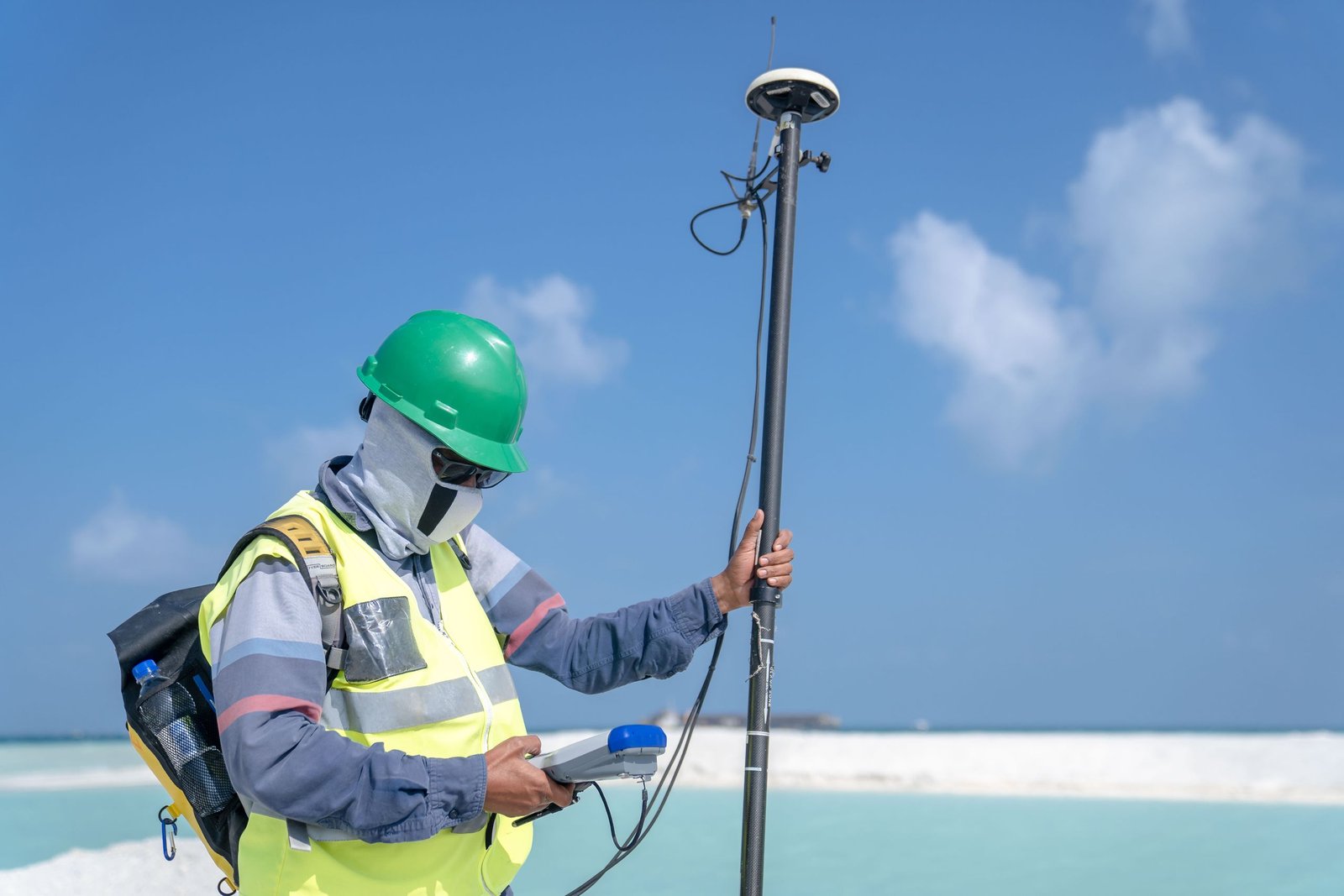
Today, Global Navigation Satellite System (GNSS) networks have become the backbone of precision surveying—quietly reshaping how spatial professionals capture, process, and share location data.
Across Arizona’s deserts, mountain corridors, and construction corridors, field crews now connect to real-time correction streams that deliver centimeter-level accuracy straight to the rover. What once took hours of static logging and post-processing now happens before the dust even settles.
Multi-Constellation Reliability
Today’s receivers don’t just listen to GPS.
They simultaneously track GLONASS, Galileo, BeiDou, and QZSS, locking onto more than 40 satellites at any given moment. Dual- and triple-frequency antennas reject multipath and atmospheric noise automatically, while network RTK services correct orbital and ionospheric errors in real time.
The result: dependable precision even beneath power lines, tree canopy, or downtown skylines.
Arizona’s Expanding Network Footprint
A decade ago, large portions of rural Arizona were positioning dead zones.
Now, private RTK providers—among them AZGPS, Trimble VRSNow, and Leica SmartNet—have stitched together seamless coverage from the Mexican border to the Mogollon Rim.
Each network streams encrypted correction data through cellular or IP links, giving surveyors, contractors, and utility crews the same reliability once reserved for state CORS infrastructure.
Field teams using the AZGPS Network report faster setups, fewer blunders, and consistent vertical control across multi-county projects. Real-time monitoring and redundant base stations keep uptime near 100 percent.
From Field to Cloud in a Single Workflow
GNSS data no longer waits for the office.
Applications like ArcGIS Field Maps and AutoCAD Civil 3D now consume live correction feeds directly. Crews stake, record, and sync points to the cloud within seconds, eliminating data silos and reducing costly re-visits.
This integration has turned every project into a living digital twin—where boundary monuments, utilities, and design models share a single geodetic truth.
Security, Redundancy, and Resilience
The more we depend on GNSS, the more critical uptime becomes.
Modern networks use TLS encryption, dual-data centers, and automated spoofing detection to keep data secure. When a base goes offline, virtual reference algorithms reroute traffic instantly, preserving centimeter precision through redundancy alone.
For infrastructure, transportation, and emergency-response operations, this reliability is as vital as the data itself.
The Next Horizon: GNSS + AI + IoT
Artificial intelligence already predicts signal interference before it happens.
Low-Earth-orbit satellites such as Starlink are extending correction delivery far beyond LTE reach, and IoT sensors stream constant positional updates for smart infrastructure.
The boundary between GNSS and everyday technology is vanishing—and with it, the distinction between surveying and spatial analytics.
A Foundation for Arizona’s Future
In many ways, GNSS networks have become the digital utility grid of the twenty-first century—quietly enabling everything from precision agriculture to autonomous construction.
For Arizona’s growing communities, they ensure that every corner pin, utility line, and roadway design rests on a common, verified reference frame.
About the Author
John Calhoun is a professional land-surveying technologist and writer focused on geospatial innovation, field automation, and the evolution of GNSS networks across the American Southwest. He contributes regularly to regional engineering and mapping publications.
🏁 About AZGPS
👉 Learn more about AZGPS GNSS Network Subscriptions or Contact AZGPS to integrate high-precision positioning into your workflow.